Last Updated: August 29, 2026
The question of gold filled vs gold plated longevity comes down to one fundamental difference: how much gold is actually there, and how securely it's bonded to the base metal. At Heather Hawkins LLC, we work exclusively with 14K gold-fill because we've seen firsthand how dramatically the two materials perform differently over months and years of daily wear.
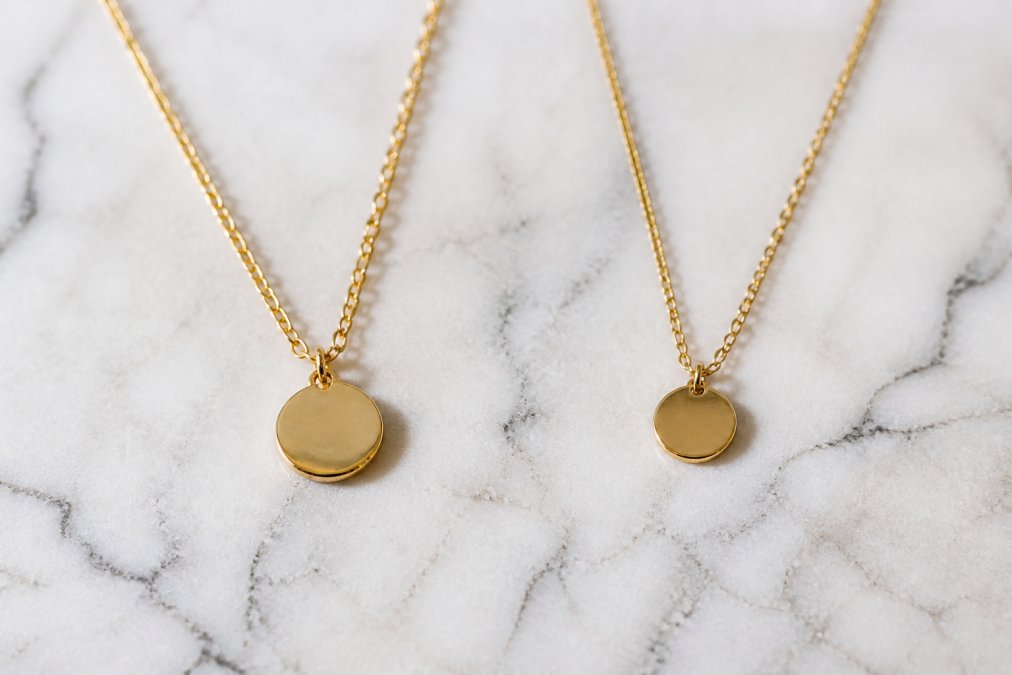
Gold-filled jewelry is a material in which a thick layer of karat gold is mechanically bonded under heat and pressure to a brass core. Gold-plated jewelry uses electroplating to deposit an extremely thin layer of gold onto the surface of a base metal. Gold-filled pieces carry substantially more gold content than plated ones, and that gold is bonded rather than deposited. This distinction drives every difference in durability, tarnish resistance, and jewelry longevity.
Gold-filled jewelry must contain a gold layer that is at least 5% of the item's total weight by law. A piece stamped 14/20 GF contains 14K gold that makes up 1/20th (5%) of the total weight, mechanically bonded to the brass core rather than applied as a coating.
Gold-plated jewelry carries a gold layer measured in microns, typically ranging from 0.5 to 2.5 microns. Even at the thicker end, the gold content percentage is negligible compared to gold-fill. Vermeil, a specific type of gold plating applied over sterling silver, sits between the two in quality but still relies on electroplating rather than mechanical bonding. The thickness difference is not cosmetic, a thicker, mechanically bonded gold layer resists wear in a way that a micron-thin electroplated surface cannot match over time.
The FTC guidelines on jewelry labeling and gold-filled standards set clear rules for how these materials can be described and stamped. Gold-filled items must be labeled as such, with common stamps including "14/20 GF" or "12/20 GF," indicating the karat and the fraction of total weight that is gold.
Gold-plated items have no minimum gold content requirement under FTC rules, which is why quality varies so widely. A piece can legally be called "gold plated" with as little as 0.5 microns of gold. "Gold vermeil" requires at least 2.5 microns over sterling silver, but that's still electroplating. If a piece carries no hallmark at all, that's a significant red flag for gold content and durability.
Gold-filled jewelry, with proper care, lasts significantly longer than gold-plated jewelry. Many wearers report gold-filled pieces maintaining their surface finish for a decade or more with regular use. Gold-plated pieces may show wear within months to a couple of years.
The reason is structural. In gold-filled pieces, the gold layer is thick enough that normal daily wear, friction, and exposure to air doesn't reach the brass core for a very long time. With gold-plated jewelry, the thin electroplated surface is far more vulnerable to the same conditions.
| Feature | Gold-Filled | Gold-Plated |
|---|---|---|
| Gold layer thickness | Thick (5% of total weight) | Thin (0.5-2.5 microns) |
| Bonding method | Mechanical (heat and pressure) | Electroplating |
| Typical lifespan | 10-30 years with care | Months to 2 years |
| Tarnish resistance | High | Low to moderate |
| Hypoallergenic | Generally yes | Often no |
| Base metal | Brass core | Brass or copper |
| Hallmark stamp | 14/20 GF, 12/20 GF | "GP," "GEP," or none |
| Cost | Higher | Lower |
Skin acidity varies significantly from person to person and is one of the most important factors in how quickly any gold layer degrades. People with higher skin acidity or who sweat heavily will see gold-plated pieces tarnish faster than average.
With gold-plated jewelry, the thin electroplated surface reacts to perspiration, skin oils, and environmental exposure. Once that layer wears through, the base metal underneath oxidizes and can cause green skin discoloration. Gold-filled pieces, because the gold layer is so much thicker, resist this chemical reaction far longer. For anyone with sensitive skin who has experienced rashes or discoloration from jewelry, the nickel-free, hypoallergenic properties of quality gold-fill are a meaningful practical difference.
When gold-plated jewelry wears through, options are limited. Re-plating is possible but adds ongoing cost, and the re-plated layer is still electroplated. The underlying brass core may also show corrosion by the time the plating fails.
Gold-filled pieces, when they eventually show wear after many years, can sometimes be professionally polished to restore surface finish. Because the gold layer is thick, light polishing doesn't immediately expose the brass core. This repairability gap matters for anyone buying jewelry as a long-term investment rather than a seasonal accessory.
Gold-filled jewelry can tarnish over time, but the process is slow and typically affects only the surface. Because the gold layer is thick and mechanically bonded, oxidation has to work through significantly more material before becoming visible. Many wearers go years without seeing noticeable tarnish on quality gold-fill pieces.
Factors that accelerate tarnish include prolonged exposure to sulfur compounds, chlorine, salt water, and certain cleaning products. Surface tarnish on gold-filled pieces usually responds well to gentle cleaning, unlike gold-plated jewelry where tarnish often signals that the base metal is exposed.
Gold-filled jewelry is water-resistant but not fully waterproof in all conditions. Brief contact with water, handwashing, light rain, and quick showers are generally fine for quality gold-fill pieces. The thick, mechanically bonded gold layer provides meaningful protection against casual moisture exposure that would quickly degrade a gold-plated piece.
Prolonged or repeated immersion in water, particularly chlorinated pool water or salt water, will accelerate wear over time even on gold-filled pieces. Chlorine is particularly aggressive toward gold alloys. Remove gold-filled pieces before extended water activities, hot tubs, and any contact with harsh cleaning chemicals to preserve their surface finish. Gold-plated jewelry is far less forgiving, with even brief, repeated water exposure accelerating degradation of the thin electroplated surface.
Cleaning gold-filled jewelry correctly is straightforward. The goal is to remove oils, skin residue, and surface buildup without abrading the gold layer or introducing harsh chemicals that promote oxidation.
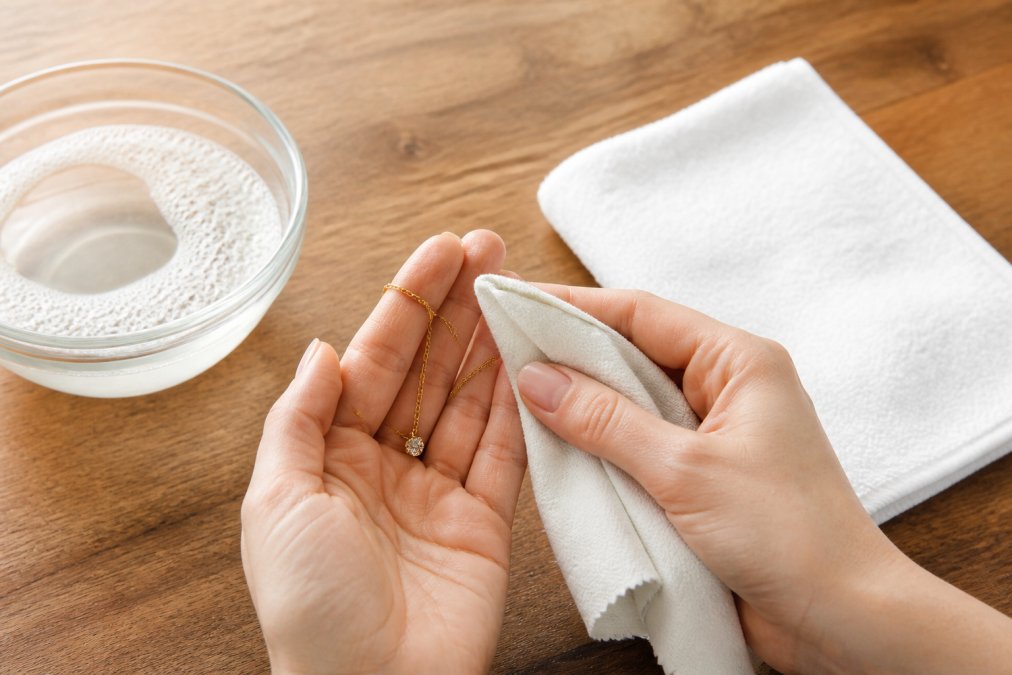
The most reliable method for routine cleaning:
For regular maintenance, a dedicated jewelry cleaner formulated for gold-filled pieces is a sound investment. Products like Connoisseurs Dazzle Drops Advanced Jewelry Cleaner are designed for 14K gold-fill, using a non-toxic formula safe for gold alloys. The Flitz Jewelry Care Kit includes a polishing crème and carnauba wax protective coating that helps slow future tarnish development.
The clasp and textured sections accumulate the most residue and are most prone to early wear. Give those areas extra attention during cleaning and dry them thoroughly, since moisture trapped in chain links causes premature tarnish.
For gold-plated pieces, use pH-balanced, ammonia-free cleaners like Sparklean Original Spray, specifically formulated for plated jewelry. Avoid any polishing cream on gold-plated pieces.
Gold-Filled Pros:
Gold-Filled Cons:
Gold-Plated Pros:
Gold-Plated Cons:
Gold-plated jewelry makes sense for pieces you'll wear a handful of times. For anything you plan to wear daily, the cost-per-wear calculation almost always favors gold-fill.
For everyday wear, gold-filled jewelry is the clear choice. The durability gap between gold-filled and gold-plated is categorical. A quality 14K gold-filled piece worn daily will outlast multiple gold-plated replacements, and the cumulative cost of replacing plated pieces typically exceeds the higher upfront cost of gold-fill within a year or two.
The hypoallergenic properties matter just as much as longevity. Many women who've experienced skin reactions to jewelry find that quality gold-fill, with its thick gold layer keeping the brass core away from skin contact, resolves the issue entirely.
According to the Jewelry Information Center's guidance on jewelry materials, the gold content and bonding method are the primary determinants of how a piece performs over time in real-world conditions. Gold-fill's mechanical bonding process produces a fundamentally different product than electroplating.
The case for gold-plated is narrowest for trend pieces you'll wear for a season. For a necklace, bracelet, or pair of earrings you'll reach for every morning, gold-fill is the only sensible answer.
At Heather Hawkins LLC, the entire collection is built on 14K gold-fill for exactly this reason. The handcrafted necklaces, earrings, and bracelets are designed to be worn daily. The FTC's guide to buying jewelry recommends understanding karat markings and material descriptions before purchasing; a 14/20 GF stamp is the clearest assurance you're getting genuine gold-fill. For anyone who's grown frustrated with pieces that tarnish or irritate within months, that distinction is the entire point.
The real difference between gold-filled and gold-plated longevity comes down to a simple structural reality: one is built to last, and one is built to look the part temporarily. For everyday jewelry that keeps up with your life, that's not a close call.
With regular care, gold filled jewelry can last 10 to 30 years, and in some cases a lifetime. Because the gold layer is mechanically bonded to the brass core and makes up at least 5% of the piece's total weight by FTC standards, it holds up to daily wear far longer than gold plated alternatives. Avoiding harsh chemicals and storing it properly extends that lifespan considerably.
Gold filled jewelry rarely turns skin green under normal conditions. The thick, mechanically bonded gold layer prevents the brass core from contacting your skin in most cases. People with high skin acidity may occasionally notice a faint reaction over many years as the surface experiences wear and tear, but this is uncommon with 14K gold fill. Gold plated jewelry, with its much thinner electroplated layer, is far more likely to cause this reaction once the surface finish begins to break down.
For daily wear, gold filled jewelry offers significantly better value over time. While the upfront cost is higher than gold plated pieces, the durability difference is substantial. Gold plated items may need replacing within months to a couple of years, while gold filled pieces can last decades. The tarnish resistance, hypoallergenic properties, and overall jewelry longevity make gold fill the more cost-effective choice for anyone who wears jewelry regularly.
The gap is significant. Gold filled jewelry must contain at least 5% gold by total weight, bonded to the base metal through heat and pressure. Gold plated jewelry typically has a gold layer measured in microns, often 0.5 to 2.5 microns thick, deposited through electroplating. That translates to a gold content percentage well below 1%. This difference in karat weight and layer thickness is the primary reason gold filled pieces resist flaking, corrosion, and tarnish so much more effectively.
Choosing jewelry that genuinely holds up to daily life shouldn't require compromise. Heather Hawkins LLC specializes in 14K gold-fill pieces, handcrafted to maintain their surface finish through real daily wear, including the sensitivity considerations that matter to anyone who's been burned by cheap plated jewelry before. Explore the collection at shophh.com and take 20% off your first order.
This article was written using GrandRanker